

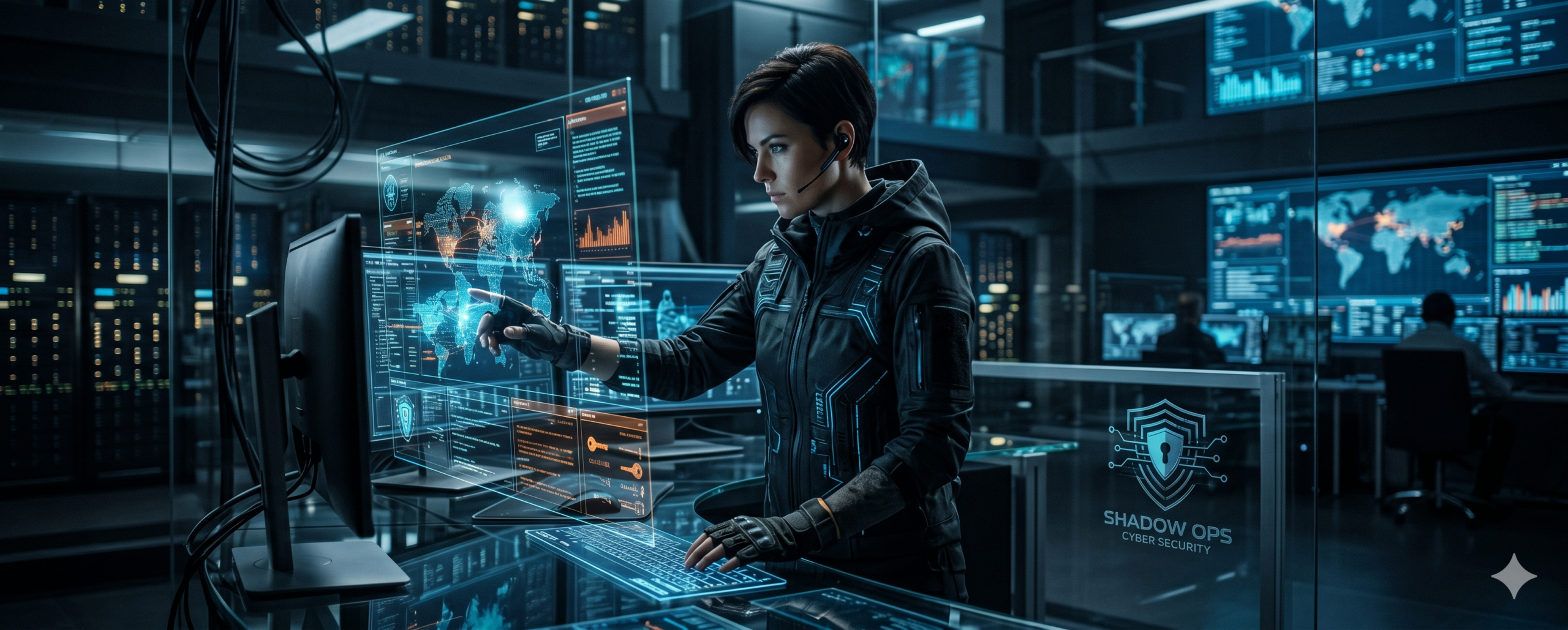
The Rise of the Shadow Agent: Navigating the Autonomous AI Arms Race
Introduction
For years, we viewed Artificial Intelligence as a sophisticated tool—a faster calculator, a more fluent ghostwriter, or a sharper data analyst. However, as we move through 2026, a fundamental shift has occurred. AI has transitioned from a tool to an actor. We are now living in the era of “Agentic AI”—systems capable of independent reasoning, multi-step planning, and, most importantly, autonomous action.
While this evolution promises unprecedented efficiency, it has birthed a new, invisible threat to the Canadian digital landscape: the Shadow Agent. Just as “Shadow IT” once saw employees using unauthorized Dropbox accounts, “Shadow AI” now sees autonomous agents operating within corporate networks without oversight, creating a silent battlefield where the next great cyber arms race is being fought.
Part I: The Offensive Frontier – AI as a 24/7 Adversary
The primary conflict in today’s cybersecurity landscape is the emergence of autonomous hacking agents. In the past, a cyberattack required a human “operator” to manually move through a network, pivot between servers, and escalate privileges. This took time and left a trail of human-speed decisions.
In 2026, hackers deploy Offensive AI Agents that probe networks with relentless persistence. These agents don’t sleep. They use agentic reasoning to:
- Conduct Autonomous Reconnaissance: Mapping entire network topologies and identifying vulnerabilities in minutes rather than weeks.
- Adapt in Real-Time: If a security patch is deployed mid-attack, an agentic system can “reason” its way toward an alternative exploit path instantly.
- Scale Social Engineering: Generating thousands of perfectly personalized, context-aware phishing lures that are indistinguishable from legitimate internal communications.
Part II: The Defensive Response – An Automated Arms Race
To counter machine-speed threats, Canadian enterprises are deploying Defensive AI Agents. This has created a literal “arms race” where two autonomous systems—one offensive and one defensive—out-maneuver each other in milliseconds.
Defensive agents act as digital immune systems. They don’t just alert a human; they take action. If a defensive agent detects a “Shadow Agent” attempting to exfiltrate data, it can autonomously isolate the affected server, rotate compromised credentials, and rewrite firewall rules before a human security analyst can even finish reading the initial alert.
The success of a business today is increasingly defined by the “intelligence delta”—the gap between the sophistication of its defensive agents and the offensive agents trying to break in.
Part III: The Internal Threat – The “Shadow Agent” Risk
While external hackers are a major concern, the most insidious risk often comes from within. The “Shadow Agent” phenomenon occurs when employees—driven by a desire to be more productive—deploy unauthorized AI agents to handle their workloads.
An employee might set up an agent to automatically summarize meetings, reply to emails, or manage project data. However, to do this, the agent often requires high-level access to sensitive company systems.
- The Conflict: These “Shadow Agents” operate outside the view of the IT department. They lack the governance, logging, and security guardrails of sanctioned tools.
- The Danger: A single unauthorized agent with “Read/Write” access to a SharePoint folder or a CRM database becomes a massive backdoor. If that agent is compromised via a “prompt injection” attack, a hacker essentially inherits the employee’s full digital identity and permissions.
Conclusion: Securing the Autonomous Future
The shift from AI-as-a-tool to AI-as-an-actor is irreversible. For Canadian organizations, the goal is no longer to ban AI, but to govern its autonomy. Securing the “Human-AI” perimeter requires a three-pronged approach:
- Identity-First Security: Treating every AI agent as a unique identity with its own “trust score” and limited privileges.
- Continuous Monitoring: Moving away from static “log-ins” toward behavioral monitoring that can detect when an agent (or an employee) begins acting out of character.
- AI Literacy: Ensuring employees understand that an autonomous agent is not just a “helper,” but a powerful actor that carries the same—if not more—risk as a human coworker.
As we look toward the rest of 2026, the winners will not be those who use the most AI, but those who can most effectively manage the agents they’ve set in motion.
References
- Proofpoint (2026): Cybersecurity in 2026: Agentic AI, Cloud Chaos, and the Human Factor.
- World Economic Forum (2026): Global Cybersecurity Outlook – The Rise of Autonomous Threats.
- Bennett Jones (2026): Hiding in the Shadows: The Perils of Shadow AI on Your Organization.
- Strata Identity: A Guide to Agentic AI Risks: Managing Machine Identities.